
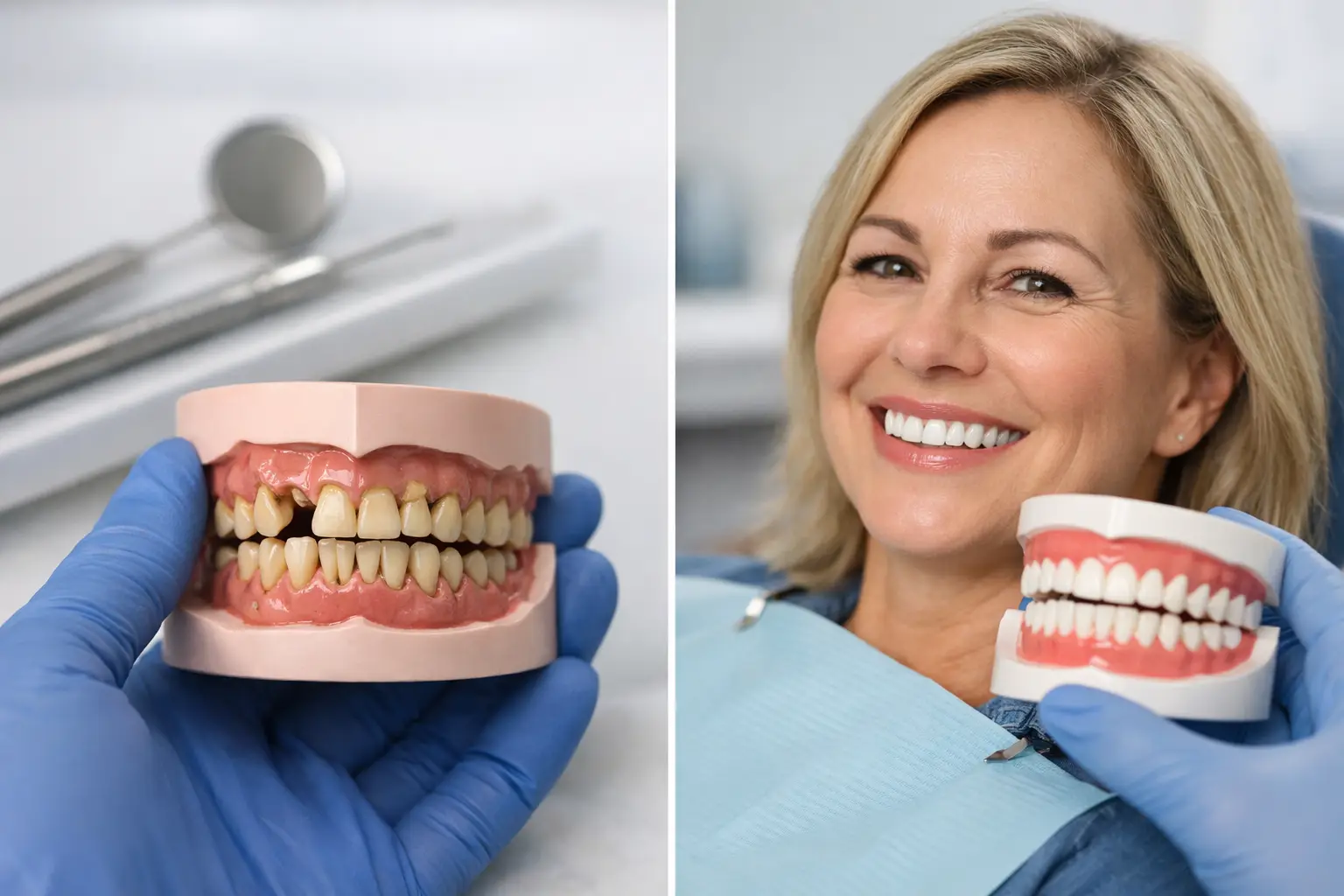
Full Mouth Restoration Case Study
When a patient says, “I just want to eat without thinking about my teeth,” that usually tells us more than a long list of symptoms. A full mouth restoration case study is never only about crowns, implants, or fillings. It is about getting someone back to normal daily life – smiling in photos, chewing comfortably, and speaking without self-consciousness.
For many patients, full mouth restoration becomes necessary after years of wear, broken teeth, tooth loss, untreated decay, gum problems, or a bite that has slowly become unstable. Sometimes the damage is obvious. Other times, the real issue is cumulative – small problems stacked on top of each other until the mouth no longer functions the way it should. That is why these cases need a careful plan, not a rushed fix.
What a full mouth restoration case study really shows
The value of a case study is not just the before-and-after result. It shows the thinking behind treatment. In full mouth restoration, that matters because there is rarely a one-size-fits-all answer.
A patient may need restorative treatment to repair damaged teeth, but cosmetic goals are often part of the conversation too. Another patient may care most about pain relief and chewing function, with esthetics as a secondary concern. The right treatment plan has to balance oral health, comfort, longevity, appearance, and budget.
In a community practice setting, this is especially important. People want advanced care, but they also want a team that listens, explains options clearly, and builds treatment around real life. That includes time, finances, and comfort level.
A sample full mouth restoration case study
Consider a patient in their mid-50s who comes in after years of avoiding major dental work. They are embarrassed by worn front teeth, missing back teeth on one side, and several old fillings that keep breaking down. They mention jaw fatigue, occasional sensitivity, and difficulty chewing tougher foods. They also say they have started smiling less.
At first glance, the problems seem separate. On closer evaluation, they connect. The missing back teeth have reduced support for the bite. The front teeth have taken on too much force over time and become worn. Several weakened teeth now need more than simple fillings. The gums are generally stable, but there is localized inflammation around a few compromised teeth. The patient wants a healthier smile, but they are also worried about long appointments and whether treatment will feel overwhelming.
That combination is common. Full mouth restoration is often less about one dramatic dental event and more about the long-term effects of postponing care.
Step 1: Comprehensive evaluation and planning
The first phase focuses on diagnosis. This includes a full exam, digital X-rays, photos, and a review of bite function, gum health, and the condition of each tooth. In more complex cases, additional imaging may be used to assess bone levels and implant planning.
This stage matters because treatment should not begin with guessing. If a tooth can be predictably saved, that may be the best route. If it has a poor long-term outlook, replacing it may be more sensible than repeatedly repairing it. A strong plan also identifies the order of care. That can make treatment more efficient and help the patient feel less anxious because they know what comes next.
Step 2: Stabilizing disease and discomfort
Before cosmetic improvements or final restorations, the mouth needs to be stable. In this case, the first appointments address active decay, replace a few failing fillings, and treat areas of gum inflammation. One painful tooth with deep structural damage requires root canal therapy followed by protection with a crown.
This phase may not be the most exciting visually, but it is where long-term success begins. A beautiful result placed on an unhealthy foundation will not hold up well.
Step 3: Rebuilding support in the bite
The patient is missing back teeth, and that has changed how the bite functions. Replacing those teeth is a major turning point in the case. Depending on bone support, health history, timing, and budget, options might include implants, bridges, or a removable prosthetic.
In this sample case, implant treatment is chosen for the strongest long-term support and to avoid placing excess strain on neighboring teeth. Bone grafting is completed where needed, followed by healing time before implant placement and restoration.
This part of treatment requires patience. Patients often want the final smile right away, which is understandable. But proper sequencing usually leads to a better outcome. Restoring back teeth first often improves function and creates a more stable foundation for the rest of the mouth.
Why sequencing matters in full mouth restoration
One of the most useful lessons from a full mouth restoration case study is that order matters. If front teeth are restored before bite support is rebuilt, the new work may be placed under damaging pressure. If gum disease or decay is not controlled first, final restorations may fail earlier than expected.
The best sequence depends on the patient. Some need urgent care first because of pain or infection. Others benefit from phased treatment spread over time. There is no single perfect formula, but there should always be a clear reason behind each step.
Step 4: Restoring damaged and worn teeth
Once disease is controlled and bite support is improved, attention turns to the remaining worn and weakened teeth. In this case, a combination of crowns and other conservative restorations is used to rebuild shape, strength, and appearance.
This stage is where function and esthetics start to come together. Teeth need to look natural, but they also need to work as a coordinated system. The bite has to feel even. Speech should feel normal. The patient should be able to chew on both sides again.
In some cases, veneers may be part of treatment for visible teeth. In others, crowns are the more appropriate choice because the teeth need greater structural reinforcement. The right answer depends on how much healthy tooth remains and what forces those teeth will need to withstand.
Step 5: Final refinement and protection
At the end of active treatment, small adjustments can make a big difference. Bite refinement, polishing, and reviewing home care all help the final result feel natural and last longer. If the patient clenches or grinds, a custom night guard may be recommended to protect the restored teeth.
This step is easy to overlook, but maintenance is part of the restoration. Even excellent dental work needs follow-up. Regular visits help catch early wear, gum changes, or minor issues before they become larger ones.
What changed for the patient
The visible result is a healthier, more balanced smile. The more meaningful result is functional. The patient can chew comfortably, no longer avoids certain foods, and feels less tension in the jaw. Their front teeth no longer carry the full burden of the bite. They smile more naturally because they are not thinking about missing or worn teeth.
That is what makes these cases rewarding. The goal is not perfection in a showroom sense. The goal is a mouth that feels strong, comfortable, and dependable again.
The trade-offs patients should understand
Full mouth restoration can be life-changing, but it is still a major process. It often takes multiple visits and may involve healing phases between procedures. Some treatment options cost more upfront but offer better long-term stability. Others may be more affordable initially but require more maintenance over time.
There is also a balance between saving natural teeth and replacing teeth with prosthetic options. Whenever possible, preserving healthy tooth structure is valuable. But saving a tooth with a poor long-term prognosis can sometimes lead to repeated treatment and frustration. Good planning means being honest about those trade-offs.
For patients who feel overwhelmed, phased care is often the best path. Address the urgent needs first, then rebuild step by step. That approach can make advanced treatment feel manageable.
Who may benefit from this kind of care
A patient does not need to be missing every tooth to need full mouth restoration. Many candidates still have most of their natural teeth, but those teeth are worn, broken, heavily restored, or no longer working together properly.
Common signs include difficulty chewing, multiple failing restorations, chronic tooth wear, frequent breakage, jaw discomfort, and dissatisfaction with both function and appearance. If several of those issues are happening at once, a comprehensive treatment plan is usually more effective than addressing one tooth at a time without a larger strategy.
Practices such as Nevis Dental often see patients who have been living with these issues longer than they wanted to, partly because they assumed the process would be too complicated. In reality, a clear plan and a supportive team can make the experience far more comfortable than expected.
A full mouth restoration is not about changing who you are. It is about removing the daily compromises that come with a damaged, unstable, or uncomfortable smile. When treatment is carefully planned, the result is not just better teeth. It is the quiet relief of feeling like yourself again.
