
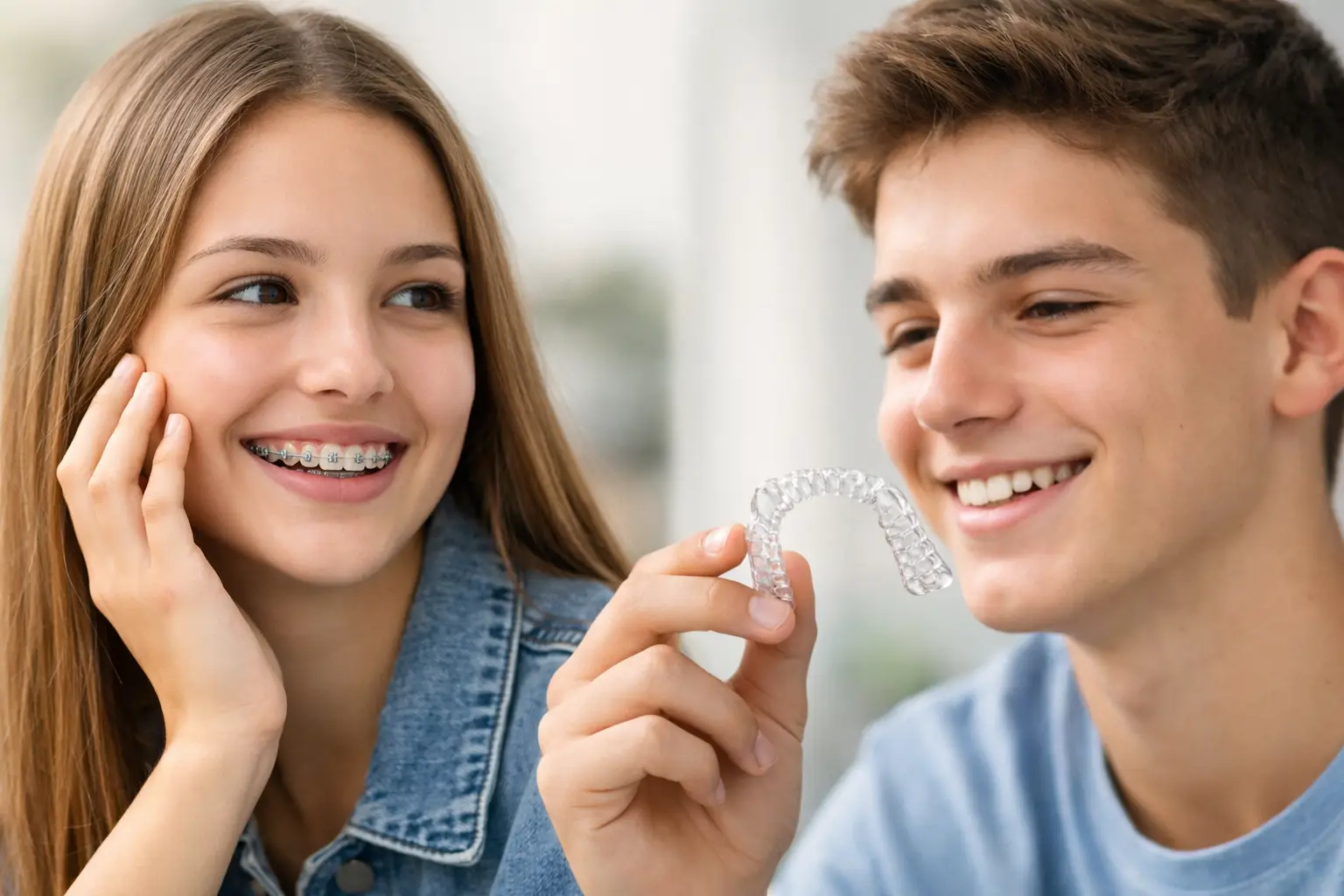
Braces or Invisalign for Teens?
The question usually comes up right after the orthodontic exam, when a parent is thinking about cost and a teen is thinking about photos, school, and whether anyone will notice. If you are weighing braces or Invisalign teens often ask about the same things: which one works faster, which one hurts less, and which one will fit real daily life.
The honest answer is that both can create a healthy, confident smile. The better choice depends on your teen’s bite, habits, schedule, and how likely they are to follow instructions every day. A great orthodontic plan is not just about what looks best on paper. It is about what your teen will actually wear, maintain, and stick with.
Braces or Invisalign teens: what is the real difference?
Traditional braces stay on the teeth throughout treatment. Brackets and wires apply steady pressure to move teeth into better positions over time. Because braces are fixed in place, they are always working.
Invisalign uses a series of clear removable aligners that are custom-made for the teeth. Each set is worn for a set period before moving to the next one. The aligners need to be worn as directed, usually most of the day and night, to keep treatment on track.
That difference matters more than many families expect. Braces depend less on memory and self-discipline. Invisalign gives more flexibility, but it also asks more from the teen wearing it.
When braces may be the better fit
Braces are often the stronger option for more complex orthodontic issues. If a teen has significant crowding, a noticeable bite problem, teeth that need more controlled movement, or a case that may benefit from fixed appliances, braces can offer more precision.
They can also be a practical choice for teens who are busy, forgetful, or not likely to keep aligners in for enough hours each day. Sports, clubs, school lunches, after-school snacks, and sleepovers may not sound like orthodontic factors, but they are. If aligners are often left in a napkin, on a cafeteria tray, or on a bathroom counter, treatment can slow down quickly.
There is also something reassuring about braces for many parents. Since they stay on, there is less daily decision-making. That can take pressure off the family and create more predictable progress.
Still, braces come with trade-offs. They are more visible, food choices are more limited, and cleaning around brackets takes more care. Some teens do not mind that at all. Others are very aware of how braces look and feel.
When Invisalign may be the better fit for teens
Invisalign can be a great option for teens who want a more discreet way to straighten their teeth. The clear aligners are much less noticeable than brackets and wires, which can make a big difference for self-conscious teens.
They are also removable, which means no restrictions on crunchy, sticky, or chewy foods during meals. Brushing and flossing are usually easier too, because there are no wires to work around. For teens who care about appearance and want as little interruption to daily life as possible, that flexibility is a major benefit.
Invisalign can also feel more comfortable for some patients. There are no metal brackets rubbing against cheeks or lips. There is still pressure as teeth move, especially when switching to a new aligner, but the experience is often described differently than braces.
The catch is consistency. Invisalign works well when it is worn well. A responsible teen who keeps up with routines may do beautifully with aligners. A teen who tends to lose things, skip steps, or take shortcuts may not.
Appearance, confidence, and school life
For many teens, this is not a small issue. It may even be the deciding one. Some are perfectly comfortable with braces and even enjoy choosing band colors. Others feel much more confident with clear aligners that blend in.
That confidence matters. Orthodontic treatment is a long process, and the emotional side of it deserves respect. If a teen feels embarrassed by one option and motivated by the other, that can influence how well they cooperate with treatment.
At the same time, appearance should not be the only factor. A nearly invisible treatment plan is not automatically the best one if it is less suited to the teen’s orthodontic needs or daily habits. The right choice balances cosmetic preferences with the realities of treatment.
Comfort and adjustment
Neither braces nor Invisalign is completely pain-free. Both move teeth, and tooth movement naturally causes some soreness from time to time.
Braces can cause irritation after adjustments, especially early on or after a wire change. Wax and a little patience usually help while the mouth adjusts. Invisalign tends to avoid that bracket-and-wire irritation, but a new tray can still create pressure that feels tight for a day or two.
Comfort also includes convenience. Braces mean fewer chances to forget something, but more care around food and hygiene. Invisalign means fewer food restrictions, but more responsibility throughout the day. Some teens find that freedom comfortable. Others find it annoying.
Cleaning and oral health
This is one area where habits matter a lot. Braces make brushing and flossing more complicated. Food can get trapped around brackets, and plaque can build up more easily if cleaning is rushed. A teen with braces needs to be willing to spend extra time on oral hygiene.
Invisalign makes it easier to brush and floss normally, since the aligners come out. But that advantage only helps if the teen actually brushes before putting the aligners back in. If they snack often, skip brushing, or reinsert trays without cleaning, that can create its own problems.
For teens who already struggle with brushing well, neither option is effortless. The better choice is often the one they are most likely to manage consistently.
How treatment time compares
Families often want a simple answer here, but treatment time depends on the case. Some teens finish quickly with Invisalign. Others may move faster with braces. The type and severity of alignment issues, how well instructions are followed, and whether appointments stay on schedule all affect timing.
With braces, treatment tends to stay moving because the appliance is fixed. With Invisalign, missed wear time can delay results. Even a strong treatment plan can fall behind if the aligners are not used as directed.
That is why the shortest-looking option is not always the fastest in real life. The best question is not just, How long should this take? It is, Which option is my teen most likely to complete well?
Cost and value for families
The cost difference between braces and Invisalign varies by case and provider. In some situations, the two are fairly close. In others, Invisalign may cost more. What matters most is the overall value of treatment, not just the starting number.
A lower-cost option is not a better value if it creates avoidable delays or poor cooperation. On the other hand, paying more for clear aligners may be worth it if a teen is highly motivated by the appearance and convenience and will wear them exactly as prescribed.
This is where a personalized consultation helps. A good orthodontic recommendation should consider the bite, the treatment goals, and the family’s priorities together.
How to decide between braces or Invisalign for teens
Start with your teen’s orthodontic needs. Some cases clearly lean one way. After that, think about personality and routine. Is your teen responsible with daily tasks? Do they lose water bottles, hoodies, and lunch containers regularly? Are they highly motivated by aesthetics? Will they follow through without reminders?
Then think about the bigger picture. Sports, music, social confidence, eating habits, and oral hygiene all play a role. There is no prize for choosing the trendier option if it is not the better fit.
At Nevis Dental, this conversation is most helpful when teens are included in it. When they understand the reason behind the recommendation and feel heard about their concerns, treatment tends to go more smoothly.
A confident smile is not built by picking the most popular appliance. It comes from choosing the option your teen can live with, care for, and trust over time.
