
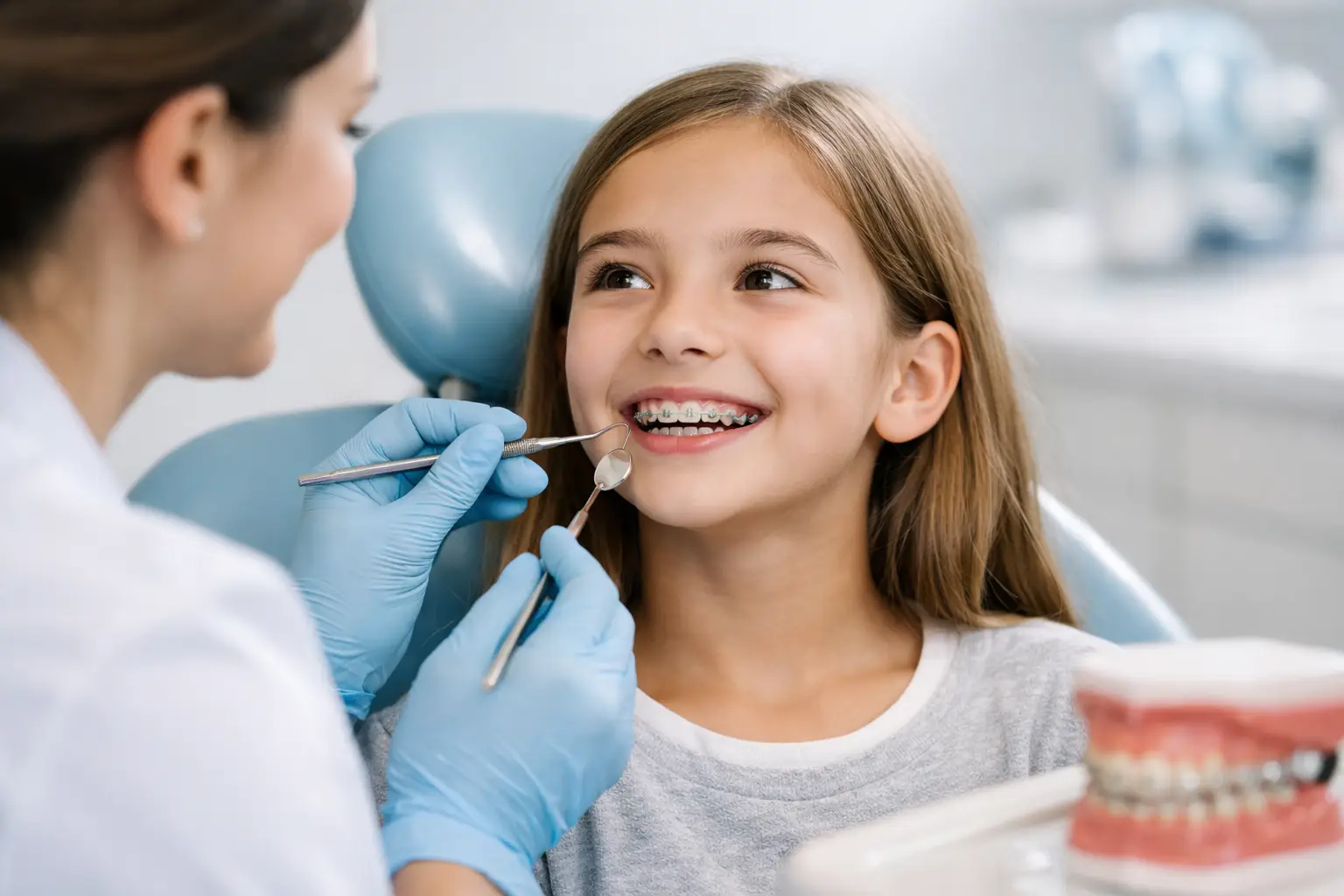
When Do Kids Need Braces?
One of the most common questions parents ask is when do kids need braces, especially when baby teeth are still falling out and every smile seems to change month by month. The short answer is that some children need braces in their early teen years, while others benefit from an orthodontic check much sooner. What matters most is not guessing by age alone, but watching how the teeth and jaws are developing.
When do kids need braces most often?
Many kids get braces between ages 9 and 14, after a mix of baby teeth and permanent teeth have come in. This is often the most practical time because the mouth is still growing, but there are enough adult teeth present to guide alignment more accurately.
That said, orthodontic needs do not always wait for the teen years. Some children show early signs of crowding, bite problems, or jaw growth concerns by age 7. An early evaluation does not automatically mean your child will get braces right away. In many cases, it simply gives the dentist or orthodontic provider a chance to monitor development and step in at the right time if needed.
Why age 7 matters
The American Association of Orthodontists recommends an orthodontic evaluation by age 7, and that advice surprises a lot of parents. At that age, children usually still have several baby teeth, so it may seem too early. But age 7 is often when bite issues first become easier to spot.
A child may look fine at a glance and still have a hidden crossbite, jaw shift, or not enough room for permanent teeth. Early evaluation helps catch problems before they become more complicated. It can also provide peace of mind when everything is developing normally.
Signs your child may need braces
Some signs are obvious, like teeth that look very crowded or crooked. Others are easier to miss unless you know what to watch for. If your child has trouble biting evenly, bites their cheeks often, or seems to chew on one side more than the other, it may point to a bite issue rather than a simple habit.
You may also notice the upper teeth sticking out far past the lower teeth, or the lower teeth sitting in front of the upper teeth. Some children have gaps that are larger than expected, while others have no space at all for incoming permanent teeth. Mouth breathing, speech changes, thumb-sucking that continues beyond the early years, and jaws that click or shift when opening can also deserve a closer look.
Appearance is often what gets a parent’s attention first, but function matters just as much. A bite that does not line up properly can affect comfort, cleaning, and long-term tooth wear.
Common reasons kids need braces
Crowding is one of the most common reasons children need orthodontic treatment. If the jaw does not have enough room for permanent teeth, they may come in rotated, overlapped, or trapped beneath the gums. In some cases, this can make brushing and flossing harder, which raises the risk of cavities and gum irritation.
Overbites, underbites, open bites, and crossbites are also common. These problems can affect how a child bites, chews, and speaks. Some are mild and mostly cosmetic. Others place uneven pressure on the teeth and jaw and are better treated earlier.
There are also growth-related issues that are not really about the teeth alone. If the upper or lower jaw is developing in a way that throws the bite off balance, early orthodontic planning may help guide that growth while a child is still developing.
Does every child need braces?
No. Plenty of children do not need braces at all, and others may only need minor treatment later on. A few may benefit more from clear aligners as teens, depending on the case. The goal is not to put every child into treatment. The goal is to identify who will benefit, when they will benefit most, and what kind of treatment makes sense.
This is where a personalized evaluation matters. Two children can be the same age and have very different needs. One may need nothing more than routine monitoring, while another may need early intervention to prevent a bigger issue later.
What early orthodontic treatment can help with
Early treatment, sometimes called Phase 1 treatment, is used when there is a clear benefit to acting before all adult teeth come in. This does not mean every child who gets an early evaluation will need early braces. In fact, many do not.
When early treatment is recommended, it is usually because waiting could allow the problem to worsen. For example, expanding a narrow upper jaw, correcting a crossbite, or creating room for incoming permanent teeth may be easier while the child is still growing. In some cases, early treatment can reduce the severity of later treatment. In others, it can help avoid damage to protruding front teeth or improve how the bite functions.
There is a trade-off, though. Some children who start treatment early may still need braces again later as more permanent teeth come in. That does not mean the early treatment failed. It means the first phase addressed a developmental issue, and the second phase fine-tuned the final alignment.
When waiting is the better choice
Sometimes the best orthodontic decision is to wait. If the bite is developing normally and the issues are mild, starting too early can add time without adding much benefit. A provider may simply keep an eye on growth and recommend treatment once more permanent teeth erupt.
This is one reason parents should be cautious about assuming crooked teeth always mean immediate braces. Timing matters. Starting at the right stage can make treatment more efficient and more comfortable.
How to tell if your child’s teeth are “just growing in” or need help
It is normal for permanent teeth to look a little awkward at first. Front teeth can come in with gaps, angles, or a slightly uneven look that improves as the mouth develops. The so-called ugly duckling stage is real, and it often resolves on its own.
The harder part is knowing when a phase is normal and when it signals a deeper issue. Teeth that seem blocked out of place, a bite that looks visibly off, or a jaw that appears shifted should not be dismissed as something your child will simply outgrow. If you are unsure, a professional evaluation is the easiest way to get clarity.
What happens at an orthodontic evaluation
An orthodontic evaluation is usually straightforward and child-friendly. The dentist or orthodontic provider will look at how the teeth fit together, how the jaws are developing, whether there is enough room for incoming teeth, and whether habits or growth patterns are affecting the bite.
Digital X-rays and photos may be used to see what is happening below the surface. This can reveal missing teeth, extra teeth, impacted teeth, or permanent teeth that are drifting into poor positions before they are even fully visible.
For parents, this visit is often most helpful because it turns a vague concern into a clear plan. That plan may be treatment now, treatment later, or simple monitoring at regular checkups.
Braces, clear aligners, or another option?
Traditional braces are still one of the most effective tools for many children and teens, especially when the case involves significant movement or bite correction. Clear aligners can be a good option for some older kids and teens who are responsible enough to wear them as directed.
Other appliances may also be used in younger children, depending on the goal. An expander, space maintainer, or habit-correcting appliance can sometimes address a specific issue before full braces are needed. The best option depends on your child’s age, dental development, and how complex the problem is.
What parents can do now
If your child is around age 7 or older and you have questions about crowding, bite alignment, or jaw development, it is reasonable to schedule an orthodontic evaluation. If your child is younger but has a clearly uneven bite, protruding teeth, or ongoing oral habits that affect the mouth, it can still be worth asking your dentist.
At home, keep paying attention to brushing, flossing, regular exams, and any changes in how your child bites or chews. Orthodontic care works best as part of a bigger picture of healthy dental development.
For families in Nevis, having a dental team that can monitor growth over time makes these decisions a lot less stressful. You do not need to figure it out alone or wait until a problem becomes obvious.
A child does not need a perfect smile at every stage of growth. They just need the right care at the right time, so their smile has the best chance to develop comfortably, healthily, and with confidence.
